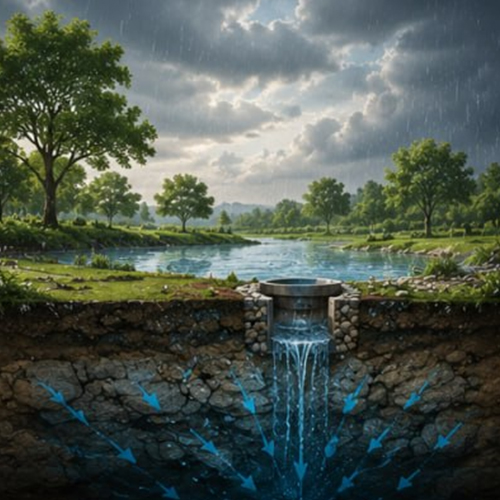
Jal Chakra: The Origin of
Natural Balance

The foundation of the Sujalaam
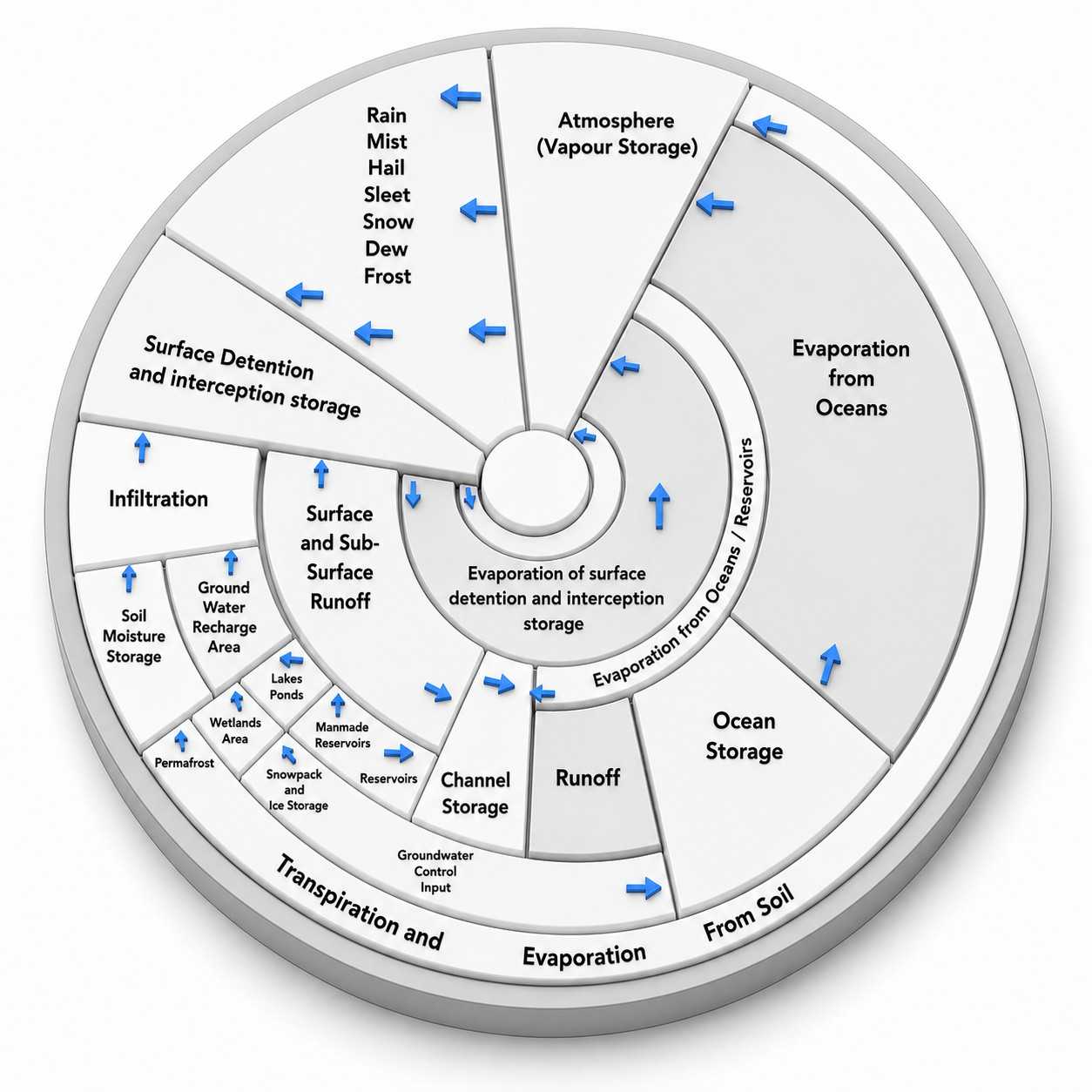
identity is inspired by the ancient concept of the Jal Chakra (Water Cycle)—the timeless
natural process that sustains life and maintains ecological balance. Through the
continuous movement of water across clouds, rainfall, rivers, oceans, soil, and
groundwater, the Jal Chakra represents nature’s most effective system of regeneration,
conservation, and sustainability.
This philosophy draws
inspiration from the 28th Sarga of the Kishkindha Kanda in the Valmiki Ramayana, where
the interconnected relationship between rainfall, water bodies, the atmosphere, and the
environment is thoughtfully described. These observations reflect a deep understanding
of water systems that remains relevant even today.
At Sujalaam, we adopted the
Jal Chakra as the foundation of our identity because it embodies the purest model of
sustainability—nature itself. Long before modern engineering, natural systems were
already conserving, replenishing, recycling, and redistributing water through a
self-sustaining cycle.
The circular form within the
Sujalaam identity symbolizes continuity, harmony, resilience, and the perpetual movement
of water that sustains ecosystems and communities. It reflects our belief that true
sustainability is achieved when resources are regenerated rather than depleted and when
development works in harmony with natural systems.
This element represents nature
in its most balanced form and serves as the philosophical foundation of Sujalaam’s
approach to rainwater harvesting, groundwater recharge, water conservation,
hydrogeological science, and sustainable water management.
Human Intervention Zone
As human civilization
advanced, rapid urbanization, industrial growth, and increasing pressure on natural
resources began disrupting the delicate balance of the Jal Chakra. Groundwater
depletion, loss of natural recharge pathways, excessive runoff, pollution, and
unsustainable water consumption created a growing disconnect between development and
environmental sustainability. This challenge inspired the second evolution of the
Sujalaam identity—the Human Intervention Zone.
This phase represents the role of responsible human action in restoring and
strengthening natural water systems through scientific planning, intelligent
engineering, and sustainable infrastructure. Rather than controlling nature, Sujalaam
believes in working alongside it by creating solutions that support natural water
movement, groundwater replenishment, rainwater conservation, and long-term ecological
balance.
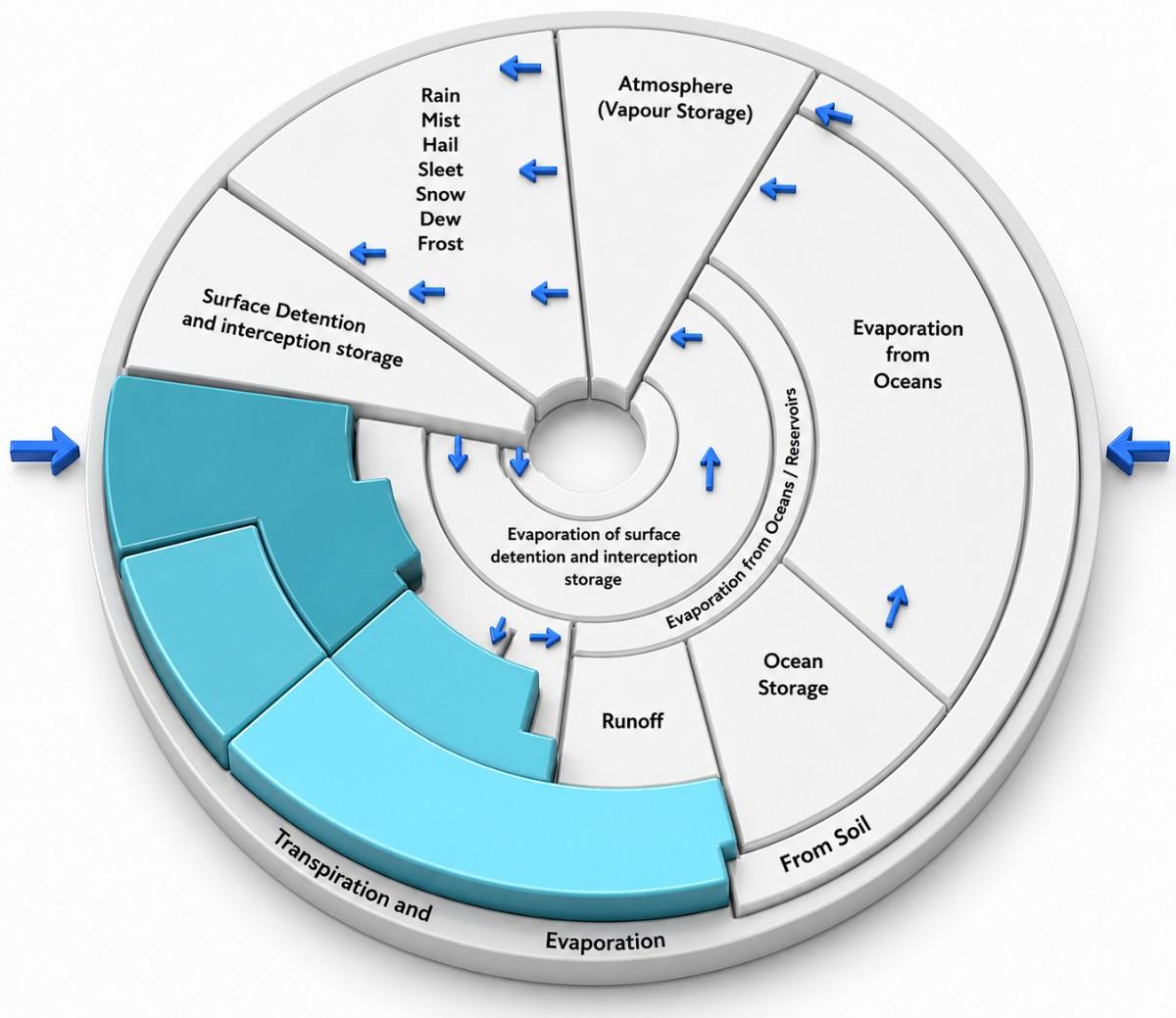
The highlighted intervention zones within the circular form symbolize purposeful actions
that help revive the natural water cycle. These include rainwater harvesting,
groundwater recharge, borewell recharge, stormwater management, water recycling, and
sustainable conservation practices. Each intervention reflects a conscious effort to
reconnect human development with the natural processes that sustain life.
The transition from a complete natural cycle to focused intervention areas represents
humanity’s evolving role as an active participant in the environmental system, where
science, technology, innovation, and sustainability come together to protect and enhance
natural resources.
This stage embodies Sujalaam Sustainability’s core belief that engineering should not
compete with nature but collaborate with it. Through intelligent water interventions and
sustainable infrastructure, we strive to restore ecological balance, improve water
security, strengthen groundwater resources, and create resilient ecosystems for future
generations.
SUJALAAM SUSTAINABILITY: The
Sphere of Impact
The final evolution of the
Sujalaam identity is the Sphere of Impact—a purposeful representation of sustainability
driven by intelligent water intervention, scientific planning, and responsible resource
management. Rooted in the Jal Chakra and strengthened through strategic human
intervention, it symbolizes the positive transformation that occurs when nature and
engineering work together.
The fluid circular form represents continuity, resilience, and regeneration—the
foundation of sustainable water management. It reflects the impact of groundwater
recharge, rainwater harvesting, water conservation, stormwater management, and
integrated water solutions, symbolizing the ongoing effort to restore balance between
human development and natural ecosystems.
The dynamic movement within the mark represents the flow of water and the expanding
influence of sustainable action. Like ripples across water, every intervention creates
wider environmental, social, and economic benefits. Its evolving form reflects growth,
adaptability, and the power of a single solution to positively impact communities,
industries, institutions, and ecosystems.
The Sphere of Impact embodies the belief that sustainability is achieved through
interconnected systems that create lasting change. It reflects Sujalaam’s commitment to
conserving water, replenishing groundwater, strengthening climate resilience, and
ensuring long-term water security.
More than a logo, the Sujalaam identity symbolizes the harmony of nature, science, and
technology. It represents a future where water is responsibly conserved, regenerated,
and managed through intelligent intervention. Bringing together Sujalaam’s
philosophy—Engineering Sustainability Through Intelligent Water Intervention—the Sphere
of Impact reflects a future where environmental balance, resource security, and human
progress move forward together.
Jal Chakra: The Origin of
Natural Balance
The foundation of the Sujalaam
identity is inspired by the ancient concept of the Jal Chakra (Water Cycle)—the timeless
natural process that sustains life and maintains ecological balance. Through the
continuous movement of water across clouds, rainfall, rivers, oceans, soil, and
groundwater, the Jal Chakra represents nature’s most effective system of regeneration,
conservation, and sustainability.
This philosophy draws
inspiration from the 28th Sarga of the Kishkindha Kanda in the Valmiki Ramayana, where
the interconnected relationship between rainfall, water bodies, the atmosphere, and the
environment is thoughtfully described. These observations reflect a deep understanding
of water systems that remains relevant even today.
At Sujalaam, we adopted the
Jal Chakra as the foundation of our identity because it embodies the purest model of
sustainability—nature itself. Long before modern engineering, natural systems were
already conserving, replenishing, recycling, and redistributing water through a
self-sustaining cycle.
The circular form within the
Sujalaam identity symbolizes continuity, harmony, resilience, and the perpetual movement
of water that sustains ecosystems and communities. It reflects our belief that true
sustainability is achieved when resources are regenerated rather than depleted and when
development works in harmony with natural systems.
This element represents nature
in its most balanced form and serves as the philosophical foundation of Sujalaam’s
approach to rainwater harvesting, groundwater recharge, water conservation,
hydrogeological science, and sustainable water management.